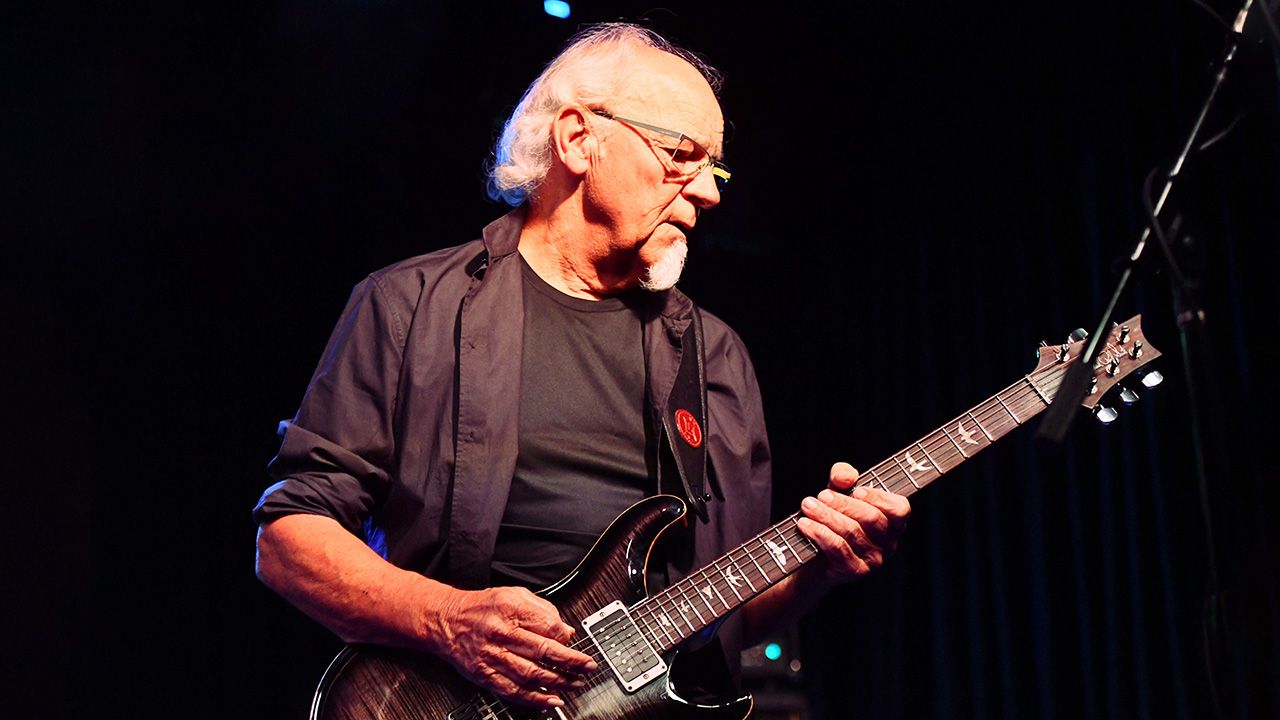
Martin Barre was the longest-serving member of Jethro Tull after Ian Anderson. The guitarist’s 43-year tenure came to an end in 2011 when Anderson broke up the prog giants, and when they later rebooted, Barre wasn’t asked to return. In 2015, when he launched genre-hopping sixth solo album Back To Steel, Barre told Prog about the early experiences that led him to explore progressive styles rather than focus on his first love, the blues.
When I started playing music in Birmingham, The Beatles were the band we all looked up to. You learned all their songs. If they released a new album you’d rush out and buy it. I’ve grown up with them; I love everything about that band.
The melodies, their personalities… and Sgt. Pepper’s Lonely Hearts Club Band was a huge turning point in music. It made them really cool. Later I had the chance to work with Paul McCartney [on 1987 track Atlantic Ocean], which was amazing. He’s a fantastic musician, obviously, and kind and intelligent.
My roots are in the blues. The blues pentatonic is probably the basis of music. It’s the building blocks – whether you call it the blues or not. When I joined Tull, they were a blues band. I’d already been in a blues band and played flute like Roland Kirk; I was playing guitar. Bluesy; a bit more jazzy.
There were a lot of guitar players in England playing the blues really badly. They were hearing Albert, BB and Freddie – all the Kings – and trying to learn their licks. But you can’t learn the licks, you have to live them. It’s not just something you can copy. It’s such a deep-rooted thing that very few players could really nail the blues.
Barre, centre, with Tull in 1972 (Image credit: Getty Images)
Peter Green did, and Eric Clapton was doing it; so there were some good players, but a lot of bad ones too. Because of them, I steered clear; I thought, you’re either going to be as good as Peter Green – which is virtually impossible – or you leave it alone. Find your own pathway through music.’
But the blues is always there. It’s the basis of everything you do on a guitar. You can’t get away from it. Back in Birmingham in the 60s, there were a few blues standards being played by the bands. That music sort of lost its way; it became pop music, soul music, Tamla. The mid-60s meandered throughout all these styles and I had to play the music that would get me a gig. But I wasn’t playing much guitar then; I played saxophone – which I hated!
Then the blues train came to England and all these amazing guys were suddenly on TV: Buddy Guy, Freddie King, BB King, Albert King. There they were, singing and playing. I was like, “Wow! This is it!”
The penny dropped and the door to the blues was opened. It was always sort of there under everything else. There were a few little blues clubs with some great bands. John Mayall was around, but it wasn’t widespread. But then it became that, and it was a great time for me.
(LouderSound)
Leave a Reply