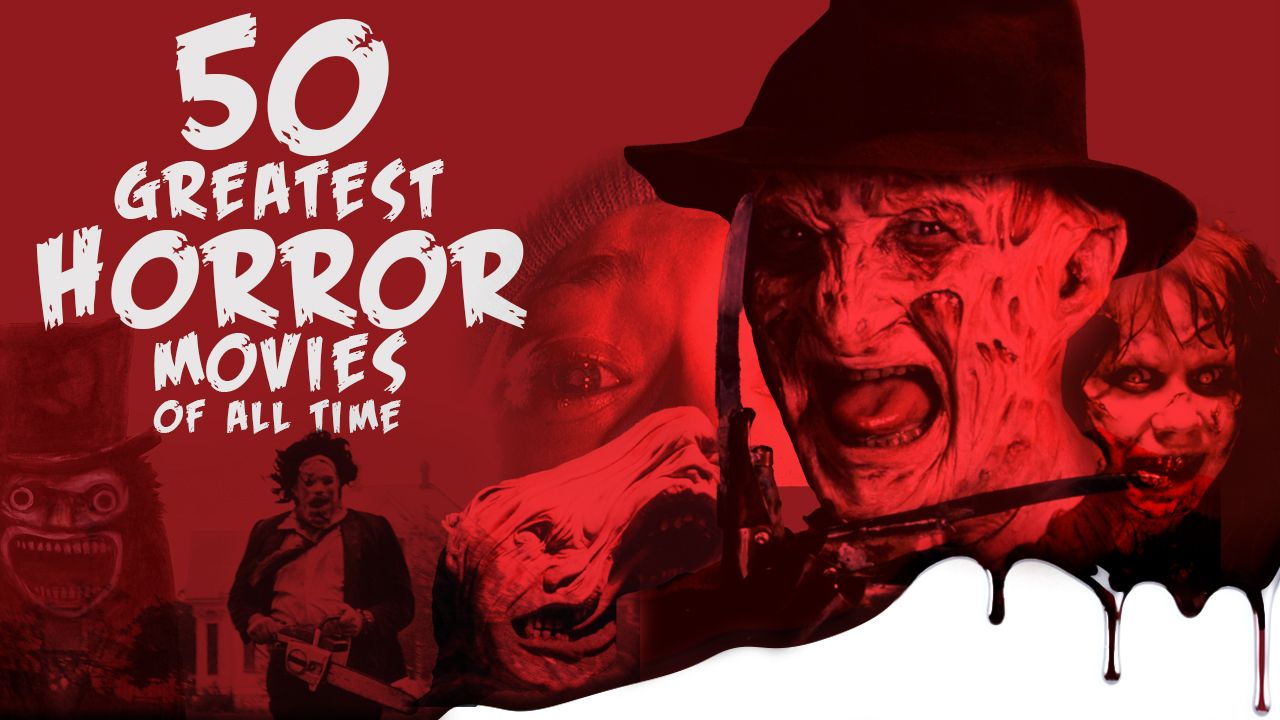
For over a century, horror has continued to terrify, confuse and inspire cinema goers, challenging us to face our darkest fears and indulging in the kind of taboos that no other film genre dare touch. From early masterpieces of German silent cinema like Nosferatu and The Cabinet of Dr. Caligari to modern classics such as Get Out, Midsommar and The Witch, horror has continued to be at the forefront of innovation in film, creating countless icons and unforgettable, pant-wettingly scary moments along the way.
With that in mind, here are the 50 greatest horror movies in history, as picked and dissected by our panel of writers and horror fanatics. Only one rule was put in place: only one entry per franchise allowed. We had to give ourselves a fighting chance, after all…
50. The Substance (2024)
Coralie Fargeat’s delirious, hilarious and disgusting, Oscar-nommed romp became one of the most talked-about movies of 2024 upon release, and for good reason. Its fabulous skewering of ageism and female beauty standards were delectably spiky enough, but mixed in with some truly foul, explosive moments of body horror and a career-best performance from Demi Moore and you had the makings of a modern classic. MA
49. I Saw The TV Glow (2024)
Strange, surprising, unexplainably unsettling and, at its core, emotionally devastating, Jane Schoenbrun’s second film remains one of the most unique horrors of the 2020s so far. What at first appears to be a charming commentary on the power of TV as a route of escapism instead reveals itself as a harrowing allegory for the trans experience, Owen’s stiflingly claustrophobic final breakdown and bizarre, surrealist epiphany affecting enough to stick in the brain long after the credits have rolled. MA
48. Saw (2004)
Its endless, diminishing-quality sequels may have exhausted Saw as a franchise, but you can’t argue with the impact of the first film. Far more than an endless gore-fest, Saw asked questions of the viewer, both in acts of literal escapology and more suggestive, moral conundrums, all while placing us in a unique but simple setting. It gave us one of the most surprising end twists in cinema history and introduced us to a brand-new horror icon in Tobin Bell’s sadistic Jigsaw. SH
47. Obsession (2026)
Yes, it’s everyone favourite viral mega-hit, but there’s a reason we all became, well, obsessed with Obsession this year. A simple premise – lonely dude wishes a girl he loves would love him back, very quickly regrets it – was elevated to greatness courtesy of a deft direction job by newcomer Curry Barker and, of course, a quite remarkable performance by Inde Navarrette, whose Nikki installed herself as an immediate horror icon. Tackling themes of sexism, incel culture and male entitlement, it’s also genuinely scary, tense as hell and packing some shocking moments of violence. What more could you want? MA
46. Candyman (1992)
Pinhead wasn’t the only horror icon spawned from the mind of Clive Barker, Tony Todd helping cement Candyman in the horror pantheon in his stunning 1992 debut as the titular character. The Bernard Rose-directed movie drew a thread between macabre folklore and socio-political commentary amidst an unsettling ghost story with gothic romance overtures that would do Dracula proud, loaded with stunning imagery and cerebral themes that remain insightful 30 years after release. RH
45. Paranormal Activity (2007)
Oren Peli’s Paranormal Activity relaunched the stagnant ‘found footage’ genre with a demonic vengeance. The low-budget, DIY format makes this tale of domestic haunting feel eerily real — from casual home video footage to prolonged shots of the main characters sleeping in bed. The stillness and silence weigh heavy as you frantically scan the screen for anything out of place. Paranormal Activity was so terrifying that it spawned six sequels. ‘Intense’ doesn’t do it justice. EC
44. Drag Me To Hell (2009)
Sam Raimi returned to the horror stylings on which he made his name with this spiritual successor to his Evil Dead trilogy, following the plight of doomed banker Christine as she tries to shake off the curse of an elderly Roma woman. Drag Me To Hell packs scares, laughs and creeping terror in equal measure – not to mention one of the most enjoyably shocking rug-pulls of a finale in modern cinema. MA
43. Raw (2016)
A collision of coming-of-age teen drama, classic cannibalism horror and a study of society’s hierarchical structures, Raw is a brilliantly shocking, unique piece of cinema. The story of vegetarian veterinary student Justine being peer-pressured into trying meat for the first time and it inspiring an insatiable bloodlust in her, Raw is a movie packed with the kind of stomach-churning images that will sear themselves into your psyche long after the credits roll. SH
42. Bride Of Frankenstein (1936)
It’s often noted that James Whale’s gothic masterpiece is one of cinema’s greatest sequels, outdoing Universal’s original 1931 Frankenstein with heightened pathos, classier visuals and sharper scares. It’s often noted that Elsa Lanchester’s brief title role provided horror aesthetics with one of the most abidingly iconic and imitated appearances of any female character ever. Less often noted is the delightfully zany comedy sequence featuring a miniature Henry VIII in a jar. CC
41. Rec (2007)
For many, the found footage horror boom peaked with Jaume Balagueró and Paco Plaza’s terrifying Spanish flick documenting a reporter and her cameraman stuck in an apartment block as a zombie plague wreaks havoc. Rec’s visceral scares were effective enough, but it was the awe-inspiring twist in the film’s final arc that truly elevated it, adding a horrifying supernatural element to proceedings that turned the nature of the outbreak on its head. MA
40. Let The Right One In (2008)
At a time where ‘vampire’ had become a by-word for ‘twinkly mopey twat’, Tomas Alfredson’s Let The Right One In reminded us all of the true essence of the fanged denizens of the night. Part-vampiric horror and part coming-of-age story, Let The Right One In contrasts stark loneliness with utter brutality in a captivating mixture that asks one key question: what does it mean to be a monster? RH
39. Us (2019)
Jordan Peele’s second movie isn’t tightly wound like his debut, but Us demonstrates how well he burns studio money. Essentially a feature-lengthTwilight Zone episode with Trump-era doses of cynicism, a family’s holiday is ruined when their doppelgängers rock up on their porch. Creepy stuff ensues. Peele takes his time unpacking class identity without ever forgetting the scares, leaning on Lupita Nyong’o’s Oscar-worthy performance to quell quibbles concerning length or plausibility. AC
38. The Blair Witch Project (1999)
The Blair Witch Project’s shoestring budget, 16mm camcorders and marketing campaign convinced cinemagoers the cast had actually died. Sure, on the surface it’s just some teens trampling through a forest in search of the fabled Blair Witch. But the fear – palpable, pant-pissing fear – spilling from the improvised dialogue and ramshackle script is undeniable. A divisive but deserved classic that dragged the found-footage subgenre from the woods and into the mainstream. AC
37. Audition (1999)
Takashi Miike’s meet-cute from Hell is infamous for its unflinching final act, to which the entire torture porn movement owes the strongest of pints. A pervy but ultimately well-meaning widower stages a fake audition to meet the girl of his dreams, settling on a quiet woman with bigger gaps in her résumé than Boris Johnson. Echoing Hitchcock’s Vertigo, Audition grabs your throat and yanks you towards its disgusting dénouement. AC
36. It (2017)
Andy Muschietti’s adaptation of Stephen King’s 1986 novel gave new life to horrors we’d previously only read about or seen in the clunky 1990 TV mini-series. Fans of Tim Curry’s original performance as Pennywise the child-killing shapeshifting clown found room in their blackened hearts for Bill Skarsgård’s unique rendition. The nostalgic 80s setting and undeniable chemistry of the kids in the Losers Club make this one helluva compelling watch. EC
35. It Follows (2014)
Writer and director David Robert Mitchell unleashed pure nightmare fuel with his breakout horror It Follows. The clever premise of a sexually transmitted supernatural stalker keeps you on edge the entire runtime. You’ll find yourself scouring every shot for the shapeshifting entity as the story unfolds and the tension builds. Mitchell’s mythology for the It Follows ‘curse’ is so clear-cut that you’ll be left obsessing over escape strategies long after the credits roll. EC
34. The Babadook (2014)
You can’t get rid of the Babadook! On the surface, Jennifer Kent’s debut paranormal psychological horror is about a dark, top-hatted entity that haunts you when you read its storybook. Underneath, you’ll find a churning tale of depression, grief, and parenthood. Essie Davis’ performance as a frayed parent-on-the-edge is underpinned by the genuinely chilling character of Mister Babadook — dark, long-fingered, and looming. It’ll literally haunt your dreams. EC
33. The Cabinet Of Dr Caligari (1920)
Film critic extraordinaire Roger Ebert once called this German Expressionist nightmare “the first true horror film”. That alone would qualify The Cabinet Of Dr Caligari for greatness, but what pushes it even higher in the scary movie echelons is that it’s still compelling viewing. The cinematography and jagged set designs are high art in themselves. Just be sure to dodge the “full sound” version and stick on the one soundtracked by post-rockers Toundra. MM
32. Train To Busan (2016)
Snakes On A Plane, on a train, sitting opposite 28 Days Later. Yeon Sang-ho’s public transport putrefactory leaves little room for nuance, tropes stuffed in like sausages to rolls. A workaholic, deadbeat dad takes his daughter on a high-speed railway from Seoul to Busan – turns out it’s packed with zombies. Unlucky, mate. Train To Busan is an absurdly, gleefully over-the-top box-office buster, yanking every emotion harder than the emergency brake. AC
31. Suspiria (1977)
Dario Argento’s sumptuous masterpiece – packed with stylish gore, hung with supernatural mystique and scored with the throbbing occult prog of Goblin – is a timeless, dizzying feast for the senses. The narrative, concerning a murderous conspiracy around a German ballet school, artfully drifts in and out of reality, Suspiria one of few films that effectively approximate a nightmarish quality (albeit a nightmare that is beautifully cinematographed and immaculately soundtracked). CC
30. Carrie (1976)
Who can forget that iconic image of Sissy Spacek, wide-eyed, doused in pig’s blood? Brian De Palma’s body horror is a masterful adaptation of Stephen King’s debut novel about the titular Carrie, a bullied teen girl who uses her gift of telekinesis to take revenge on her classmates. The combo of relatable teen trauma and the supernatural makes this a timeless classic. It’ll break your heart as it sends chills up your spine. EC
29. Sinners (2025)
An absorbing Southern Thriller that takes a delicious turn into full From Dusk Till Dawn-style vampire survival horror, Ryan Googler’s triumphant epic took notes from the likes of Quentin Tarantino, Spike Lee and Jordan Peele to craft something fresh, exciting and deliriously vibrant. Michael B. Jordan rightly won praise – and an Oscar – for his dual role as the Smokestack Twins, but from Miles Canton’s vulnerable Sammy and Jayme Lawson’s magnetic Pearline to Jack O’ Connell’s riotous Remmick, this was a true ensemble masterpiece that had everyone on top form. Plus, that music scene is an instant all-timer, horror or otherwise. MA
28. Ring (1998)
Ring’s morose muffin-top looms large over Western cinema, inspiring everything from shite J-horror remakes including The Grudge to ‘pass it on’ features like It Follows and Smile. The premise is simple: you see a videotape and die seven days later. Ring’s bare-bones ghost story is what makes it irresistible, drawing on Japanese mythology as kindling for a slow burn. When it ignites with the scare towards the end, though? Actually iconic. AC
27. The Descent (2005)
Before Neil Marshall spent seventeen years wasting everyone’s time and money, he made The Descent: part creature feature, part PSA against spelunking. Six women explore a cave, it’s not what they expected, they stumble across something. It goes south. Cramming the laddy banter of his previous movie – 2002’s immaculate Dog Soldiers – into what is basically The Thing underground, Marshall crafted a perfect survival horror flick featuring one of 2000s horror’s enduring final scenes. AC
26. Dracula (1958)
“It never occurred to any of us to use anyone else but Chris Lee,” said producer Anthony Hinds of the perfectly cast title role, a hypnotic performance bringing to life Stoker’s immortal Count in lurid Technicolor for the first time. “Heroic, erotic and romantic” is how Christopher Lee assessed the character, his powerfully seductive portrayal forever altering the perception of the Vampire King from creepy monster to goth sex symbol. CC
25. Shaun Of The Dead (2004)
Edgar Wright and Simon Pegg struck gold with black comedy’s most quotable screenplay. Paying homage to Romero and Fulci while stacking scenes with top-tier wit and genuine pathos, this is your classic zombie outbreak movie centred around two guys who just can’t be arsed with it. Wright’s manic cinematography is electric here, the practical gooeyness still holds up, and the Don’t Stop Me Now scene remains unrivalled for laugh-out-loud violence. AC
24. Hereditary (2018)
When referring to ‘that moment in Hereditary’, you could mean at least three. Ari Aster flicks through a Rolodex of grief for his feature-length debut, casting Toni Collette as a mournful mother, daughter and wife whose family tree is hewn. She embodies trauma, unable to find her place while nefarious forces work their magick. Beautifully shot, fist-in-your-mouth shocking and tense to the point of prolapse, Hereditary is a feel-shit hit. AC
23. The Omen (1976)
A multi-Oscar-winning box office smash, enacting Book of Revelation prophecies about the coming of the Antichrist in the form of a little boy? There’s a pseudo-Biblical profundity (and a very 70s sense of pessimism) about The Omen that struck a powerful chord with much bigger audiences than horror films were used to. Several perfectly executed and memorable supernatural kills ensure that The Omen strikes a powerful chord with the hardened gore-hounds, too. CC
22. The Fly (1986)
David Cronenberg is the undoubted king of body horror, and The Fly is his masterpiece. Featuring an all-star cast that contains the likes of Geena Davis, Eric Stolz and horror legend Vincent Price, the show is stolen by an awesome performance by the enigmatic Jeff Goldblum. The marriage of Cronenberg’s unsettlingly gruesome and bizarre visuals and Goldblum’s character Seth Brundle’s descent from a geeky, socially awkward scientist into a part-man-part-fly hybrid monster is absolutely perfect. Horrific, disturbing, upsetting and, yet, an oddly touching tale. SH
21. Rosemary’s Baby (1968)
Rosemary’s Baby is part body horror and part Satanic thriller. Director Roman Polanski filmed the reputedly ‘cursed’ film in the gothic decadence of New York’s Dakota building and used long, unbroken shots to create an unsettling, ominous atmosphere. Despite appearances, baby-stealing Satanic witches aren’t the only horror in this film. The treatment of vulnerable women in domestic danger is a prevalent theme and a nightmare that is still very real in our modern society. EC
20. 28 Days Later (2002)
The 80s and 90s murdered the zombie’s credibility, as the monster tumbled from George A. Romero masterpieces to languishing in cash-ins, ripoffs and lowbrow parodies. Then 28 Days Later made them cool again. Danny Boyle’s most freakish film updated the undead for the 2000s by making them faster and more contagious. Its scenes of widespread desolation and endless missing person flyers also evoked very real post-9/11 horrors. MM
19. The Witch (2015)
Robert Eggers announced himself as one of horror’s most exciting new auteurs with this stunning directorial debut, which stitched together authentic 17th century gloom and doom with supernatural scares and an earthy, visceral terror that lurked just underneath the surface. It provided a breakout role for Hollywood star-in-waiting Anya Taylor Joy, and even introduced horror’s unlikeliest new icon in the form of a big, badass goat called Black Phillip. Delicious. MA
18. The Wicker Man (1973)
Christopher Lee always insisted that The Wicker Man was the best film he ever had a hand in making. The metal-as-fuck former Nazi-hunter plays shadowy antagonist Lord Summerisle, who leads a cult on a Scottish island that antagonises policeman Neil Howie before sacrificing him to their Pagan gods. Its depictions of orgies and heathenism shocked the early 70s establishment, while today the acting and central mystery maintain it as essential viewing. MM
17. Nosferatu (1922)
For pilfering Dracula’s plot without authorisation, Bram Stoker’s widow wanted all copies of this German silent classic destroyed. Thankfully, the evil Count Orlok survived – 100 years and counting – to provide horror cinema with its first great iconic antagonist (despite barely nine minutes of screentime). There are no jump scares or gory thrills, but the distinctive, pioneering visuals, genre trope innovations and haunting atmosphere of sinister unease remain powerful a century on. CC
16. An American Werewolf in London (1981)
How could you not love An American Werewolf in London? Zombie SS officers, one of the greatest fake-out jump scares in history, some brilliantly gory prosthetics and even a young Rik Mayall: John Landis’ horror-comedy is a phenomenally dizzy thrill from start to finish. It also features the finest monster transformation scene in cinema history, deservedly picking up the first ever Academy Award for Best Makeup in the process, and kickstarted the horror and comedy mash-up that gave us everything from Evil Dead 2 to Shaun Of The Dead and beyond. SH
15. Hellraiser (1987)
Visually arresting, darkly subversive and horny as fuck, Hellraiser isn’t just one of the best British horror movies ever – it’s an alternative culture cornerstone whose influence runs through film, music, fashion and more. Clive Barker did a fine job of bringing his gruesome visions to life, but it was an imperious performance by Doug Bradley as the Lead Cenobite (soon to be known as Pinhead) that helped birth one of horror’s most enduring franchises. MA
14. Psycho (1960)
Even though you know it’s coming, the lurch from Marion Crane’s story of petty embezzlement to her motel shower slashing by deviant taxidermist Norman Bates still feels masterfully disorientating. Although Alfred Hitchcock’s careful, discreet sequence of shots comprising the infamous murder might not alarm many audiences today, the swivel-chair reveal of the dead mum’s skeletal face can still send popcorn flying, while Anthony Perkins’ chillingly plausible performance remains deeply unnerving. CC
13. Jaws (1975)
Never let it be forgotten that one of the first summer blockbusters was a horror. Jaws was the moment Steven Spielberg truly broke through as a director, balancing bloody spectacle with scenes that could be lifted directly from a tense socio-political thriller were they not nestled in a larger-than-life creature feature. From its iconic soundtrack to its starkly terrifying opening scene that traumatised generations from going in the sea, Jaws remains the high watermark for the changes horror can enact on cinema as a whole. RH
12. Dawn Of The Dead (1978)
George A. Romero’s wicked upheaval of consumerism follows four survivors holed up in a shopping mall, battling through undead hordes, mental musical cues and Tom Savini’s sinewy practical effects. Each character is fully fleshed-out – watch the 2004 remake to see how right Romero got it – which makes the frantic final act all the more harrowing. Often imitated, rarely bested, cinema’s most ripped-off zombie export still bites over forty years later. AC
11. Midsommar (2019)
Ari Aster’s second effort shunned the claustrophobic, supernatural mania of Hereditary in favour of an expansive, trippy, folk horror epic. Instantly iconic and sprinkling just enough visceral scares over its ever-heightening sense of creeping dread, Midsommar was far more than Wicker Man for a new generation: it was a brooding, layered genre masterpiece, hung around an emotionally devastating performance by Florence Pugh and filled with hidden terrors that would take repeat viewings to fully unwrap. MA
10. Scream (1996)
Scream is a horror film made for horror fans. Wes Craven’s teen slasher knows its DNA inside and out, outlining horror film tropes one minute and subverting them the next. Its campy, self-aware, ultra-quotable dialogue is every inch as infamous as its iconic ‘Ghostface’ killer. The ghoulish white mask has been adopted by seven other killers across the five-film franchise, giving rise to the idea that the murderer is always someone you know… EC
9. Get Out (2017)
Before 2017, Jordan Peele was “that other guy” in the Key & Peele sketch show, with his biggest cinematic foray being the buddy cop box office bomb, Keanu. Then he made Get Out and became horror’s most hyped director. This psychological mindfuck was perfectly placed in Trump’s America, highlighting the casual racism of a seemingly liberal society. Add in a masterful lead turn by Daniel Kaluuya and you get a modern classic. MM
8. Evil Dead II (1987)
Of all four films in the Evil Dead franchise, Evil Dead II nails Sam Raimi’s trademark ‘splatter comedy’ tone perfectly — not too serious, not too silly. Lead actor Bruce Campbell’s physical comedy heightens the inventive practical effects and clever camerawork to give ED2 a fun, original vibe that has lasted the test of time. Plus, the ending has a geyser of blood and a fistfight with a giant demonic tree. Need we say more? EC
7. A Nightmare on Elm Street (1984)
Freddy Kruger is arguably the most instantly recognisable figure in horror since Dracula. Although he would become cartoonish and wisecracking as the years progressed, it’s still easy to see why. The story of a claw-handed, severely burned and disfigured child murderer who kills you in your sleep remains a magnificently unique idea. What else would you expect from a horror master like Wes Craven, who brings the idea of the sins of the parents being handed down to their children to life in a beautifully ghastly way. SH
6. The Texas Chain Saw Massacre (1974)
It’s almost ironic that Tobe Hooper’s The Texas Chain Saw Massacre earned so much controversy for its brutality, given that the film was essentially a scathing critique of America’s meat industry. But therein lies the beauty of what Hooper created; a garish, cheap aesthetic that has been (and still is) copied endlessly right up to this year’s brilliant X, more about tension and abject terror than on-screen gore or spectacular kills. Looking back, the original Texas Chain Saw Massacre seems almost quaint and conservative, much of the run-time spent menacing heroine Sally Hardesty (Marilyn Burns) while most of the film’s most gruesome turns are left to the viewer’s imagination. But then, that’s exactly what the best horrors are all about: forcing us to confront our own twisted fears. RH
5. Halloween (1978)
John Carpenter and Debra Hill’s Halloween didn’t invent the slasher genre, but it may as well have! It’s a masterclass in slow-building suspense, peaked with moments of pure terror, driven by Carpenter’s unbroken tracking shots and spine-tingling score. It somehow captures the ambience of All Hallows’ Eve in all its ghoulish potential. Halloween was so groundbreaking that it became a 13-film franchise and turned Jamie Lee Curtis into horror’s favourite ‘scream queen’ while making a household name of its masked babysitter-killer, Michael ‘The Shape’ Myers. Other holiday-themed horrors would soon follow suit, including Prom Night and — most notably — Friday the 13th. EC
4. The Shining (1980)
Even if it was just Jack Nicholson going batshit in an empty hotel where blood gushes out of lift doors and creepy twins haunt the corridors, The Shining would be a great horror film. In fact, legendary auteur Stanley Kubrick given free rein on inspirational source material from best-loved author Stephen King made for an endlessly fascinating and profound cinematic experience. Everyone who sees The Shining comes away with their own set of theories and interpretations, and every viewing yields unsettling new details – indeed, there’s an entire feature film delineating the film’s codes, clues and themes, 2011’s Room 237. CC
3. Alien (1979)
Before Alien, the realm of science fiction horror belonged almost solely to black-and-white B flicks like Attack Of The 50 Foot Woman. However, when Ridley Scott marched into 20th Century Fox’s offices and pitched his next film in three words – “Jaws in space” – it ignited the genre’s first timeless classic. Alien’s premise is devilishly simple: seven intergalactic truckers getting picked off on a claustrophobic spaceship. However, ingenuity’s everywhere, mostly in the form of the extraterrestrial creature plucked from the nightmares of H.R. Giger. It’s no surprise that the hideous image launched a horror institution now four decades old. MM
2. The Thing (1982)
Released in an era where celebratory, family-friendly sci-fi romps like E.T. and Star Wars were being eaten up by cinema goers, The Thing was criminally overlooked upon release, written off by critics as a shameless gore fest lacking emotional depth. How ridiculous that all seems now: John Carpenter’s greatest work is a masterful commentary on Cold War paranoia, toxic masculinity, nihilism and ‘othering’, racked with tension and otherworldly horror. Its all-male cast put in performances that remain mostly understated but utterly compelling, while Ennio Morricone’s simplistic but chilling score and Rob Bottin’s genre-defining SFX rounded out a film that remains peerless. MA
1. The Exorcist (1973)
The tale of a sweet little girl possessed by an ancient Mesopotamian demon, The Exorcist broke box office records around the world and regularly appears on cineastes’ greatest ever movie lists (even without the horror qualifier). It is a uniquely affecting and accomplished production with an ending that emphasises noble self-sacrifice and heavenly love overcoming demonic hate. And yet, insanely, from 1988-1999, it was illegal to own a copy in the UK. When The Exorcist was reissued to cinemas in 2000, the much-parodied gross-out sequences which had so traumatised ‘70s audiences – rotating head, projectile pea soup, filthy blasphemous invective, self-abuse with a crucifix – provoked more snorts of laughter than screams of terror, but the film’s deep sense of emotional disturbance remains starkly undimmed.
Jason Miller’s careworn Father Karras, wracked with grief, guilt and inner turmoil over his mother’s death and his crisis of faith, is one of horror cinema’s most complex heroes; the demon Pazuzu gets a treasure trove of sassy quotable lines (“Your mother sucks cocks in Hell, Karras, you faithless slime!”); and Mike Oldfield’s hippy prog opus Tubular Bells became forever associated with the epic battle between good and evil playing out in a child’s bedroom. CC
(LouderSound)
Leave a Reply