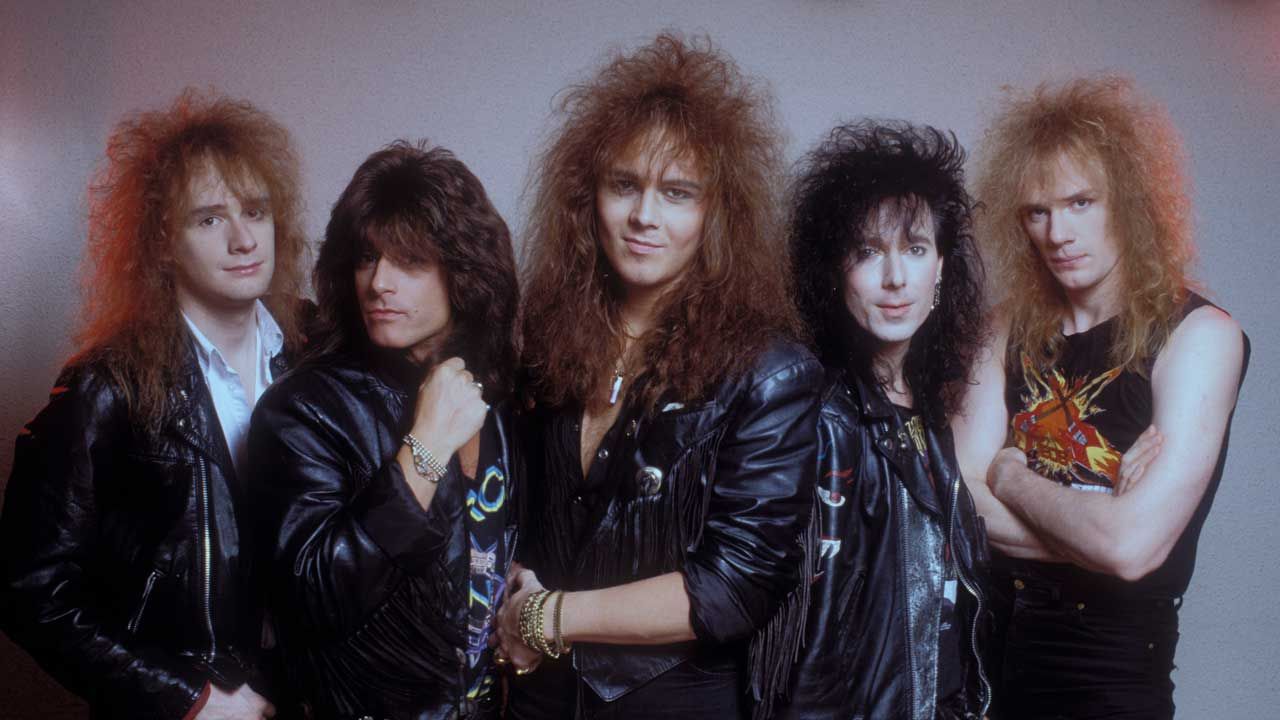
Recovering from the punk movement’s gatecrashing of an increasingly self-indulgent and self-important late-70s music scene, the early 80s saw a swing back towards the other extreme. In the US there was a sudden onslaught of hot-shot guitarists, bolstered by the arrival in Los Angeles in February 1983 of a cocky 19-year-old Swede by the name of Yngwie Malmsteen.
The musical imagination of the Stockholm-born Malmsteen had been fired by Jimi Hendrix, and before long he was a devotee of Deep Purple’s Ritchie Blackmore as well, while also having his ears pricked by classical composers such as JS Bach, Vivaldi, Beethoven and Mozart.
Malmsteen arrived in LA to join Steeler, who were fronted by Ron Keel, but before long the Swede had traded up to Alcatrazz, who were led by former Rainbow singer Graham Bonnet.
However, Alcatraz too failed to satisfy the precocious guitarist, and in 1984 he began a solo career backed by long-time friend and keyboardist Jens Johansson and sometime Jethro Tull drummer Barriemore Barlow. Not surprisingly, Malmsteen’s debut all-instrumental Rising Force album showcased his neo-classical heavy metal and staggering technical ability. Impressively, the album also won the guitarist a Grammy nomination.
In the next two years Marching Out and Trilogy followed, with Mark Boals and then Jeff Scott Soto on vocals. But it was with 1988’s Odyssey that Malmsteen broke into the mainstream. Having brought in former Fandango and Rainbow vocalist Joe Lynn Turner, Malmsteen immediately headed in a more commercial direction under the guidance of producer Jeff Glixman.
On Odyssey, Malmsteen fuses his lightning-fast fretboard technique with some of his most accessible material. While the thunderous opener Rising Force, Riot In The Dungeons and Faster Than The Speed Of Light are self-explanatory, the overtly commercial Heaven Tonight (with multi-tracked vocals), the delicate (at least initially) ballad Dreaming and the inherently melodic Déja Vu, Crystal Ball and Now Is The Time managed to reach beyond guitar-mag obsessives.
Joe Lynn Turner and Malmsteen parted company after a tour that produced the excessive live album Trial By Fire: Live In Leningrad. Since then Malmsteen has employed a dizzying number of vocalists and other musicians. The studio albums which immediately succeeded Odyssey – Eclipse and Fire & Ice – retained some commercial elements, but soon Malmsteen focused on a heavier approach: 2000’s War To End All Wars and 2002’s Attack!! contain all the subtlety their titles suggest.
A long-time resident of Miami, Malmsteen’s popularity these days is mostly confined to Japan and continental Europe, but with an impressive work ethic – and a towering ego to match – he continues to record and tour, and his 23rd solo album, Hell Or High Water, is due in November.
(LouderSound)
Leave a Reply