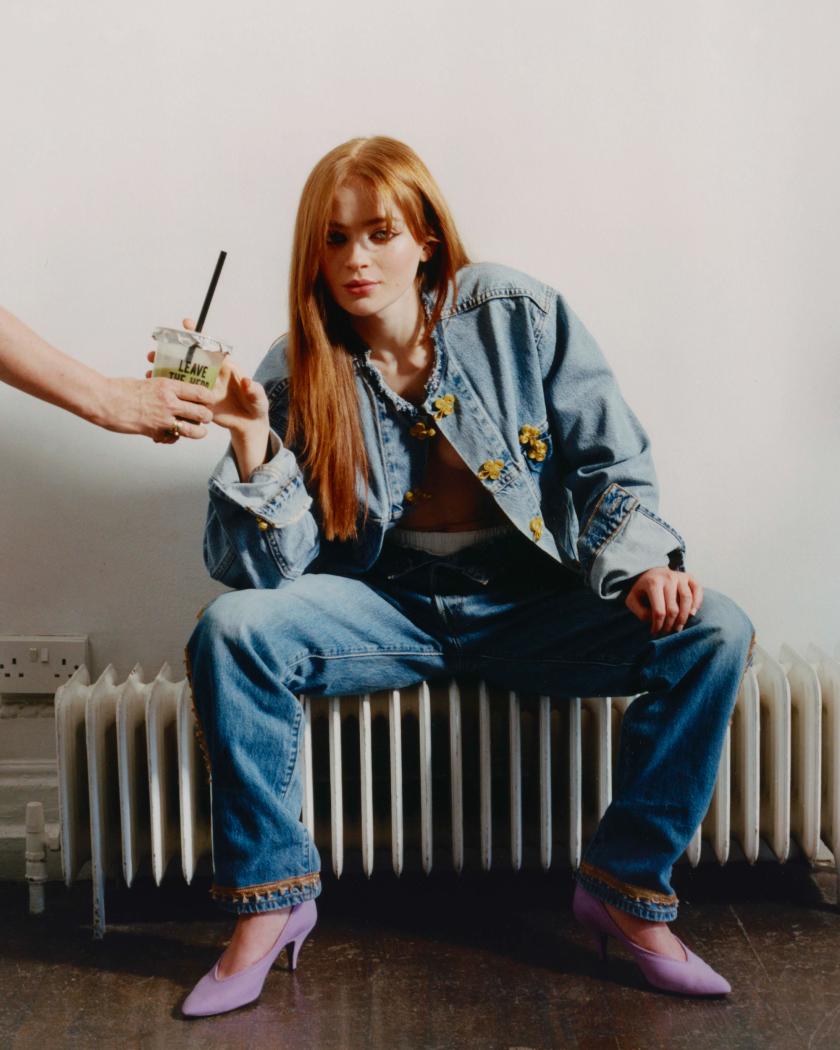
In his signature colour-blocked collage style, the London-based photographer and director has worked for clients including Carhartt and Speedo, as well as artists such as Nigo and Little Simz.
“When I was younger, I’d spend ages looking through old black and white boxing books and then researching whoever had shot them,” says London-based photographer and director Elliot James Kennedy. “That definitely shaped how I saw photography early on, and started my love for classic black and white photography – I quite quickly became obsessed with photographers like Bill Brandt and Richard Avedon.”
Then, when lockdown came during the pandemic, everything changed. “I’d always wanted to bring painting and collage into my photography but never really had the time. Suddenly I wasn’t shooting as much, so I started printing off loads of old work, painting over it, cutting it up and collaging it – just making stuff to keep busy really.”
What started on a whim soon became his visual language, one defined by painterly strokes of colour, cut-out materials plastered over photography, and many other gorgeously layered visuals. Once he found this style, he started to post bits online, and – somewhat to his own surprise – that’s what led directly to his first commissions for the likes of Carhartt and Isabel Marant. “Now it’s become a massive part of how I work,” he says. “I like stripping an image back, using colour blocking, isolating things, layering everything together and seeing where it ends up.”
Elliot’s route started in Jersey, when he was torn between choosing sport and art, until he leaned into the art side in honour of his grandad – “a boxer but also an unreal painter.” Art college led to painting and sculpture, before photography edged its way in as, in his words, “a way of making art commercially viable”. He studied at Manchester Met, calling the darkroom “probably where I learnt the most”, then went straight into assisting after graduating, working under mentors including Antony Crook before a move to London opened up music magazine work, and eventually the sports campaigns – Adidas and Nike football among them – that built out the rest of his client list, now stretching to Nike, Gucci, Kenzo, Hugo Boss and Apple.
Across his portfolio, you’ll see a piece for Carhartt, where he takes a straightforward portrait and turns it into a visual puzzle – a figure with their arms suspended in the air, a stack of books placed to the side and thick red tape at either end. He also created artwork for Little Simz for the March 2026 issue of Nylon magazine, which features limbs and lettering crashing into each other in bold primary colours, creating the illusion of a torn poster.
He also created a campaign for Speedo, which is one of his favourites due to the creative freedom the client gave him. “After the shoot I went back into the prints and reworked them all by hand. I had old Olympic posters and artwork in mind, so they’ve got a slightly retro, old-school sporting feel, but with contemporary athletes. I’ve been really drawn to primary colours recently too, so it all kind of came together naturally.”
Another favourite is when he photographed Nigo for the Design Museum, “a pretty surreal one”, he says. Elliot placed the “fashion legend”, who’s the artistic director of Kenzo, on a Panton chair – a classic mid-century modern design originally created by Verner Panton. In the piece, Nigo is leaning back slightly, his forearms chopped, repositioned and unaligned, with various sections of the image cut out and restuck in signature primary tones. “I was also really inspired by the architecture of the museum itself. It’s got that Brutalist, Bauhaus feel, so I wanted the pictures to echo that as well.”
Every image for Elliot starts with a photograph, shot with the finished piece already half-formed in his head, deliberately leaving space in the frame for what comes next. Everything after that is made by hand following a process of painting, cutting, drawing and anything else the piece calls for. “I didn’t want to spend my whole life staring at a screen,” he says.
“I missed actually making things with my hands from my painting days, so this feels like the best mix of both worlds.” And looking ahead, he’s angling for enough personal work to pull together an exhibition. “That’s definitely the next thing I’d love to make happen,” he says. “Just want to absolutely smash it really.”
Leave a Reply