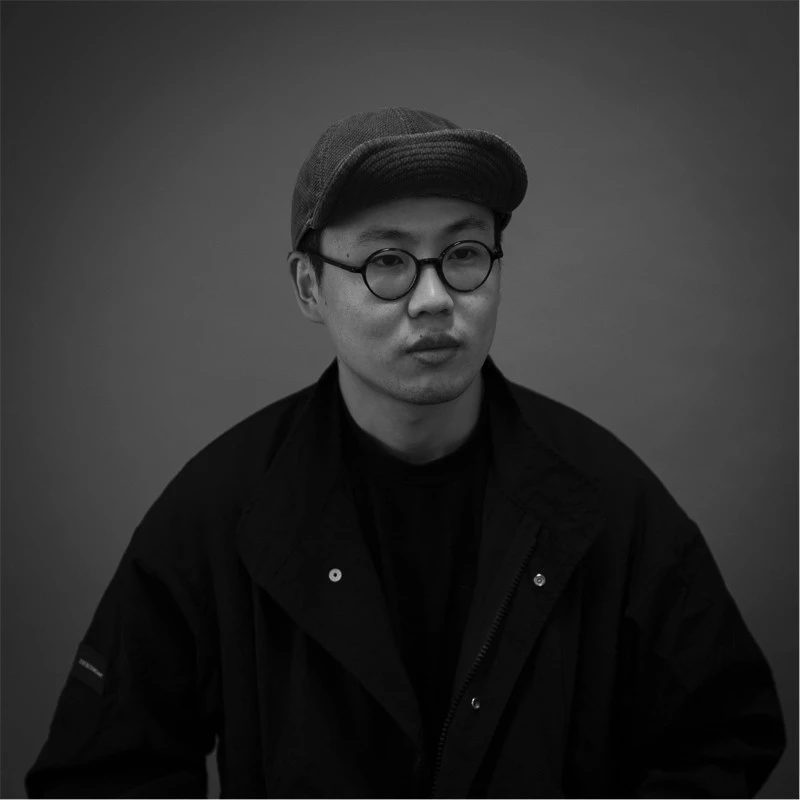
The senior UX designer reveals the lessons that moving between different cultures has taught him.
Ever dreamt of working abroad? I did, back in the early 2000s, and it led to a three-year career break from journalism to teach English in Japan. I loved every minute of it, but it also taught me something profound.
Previously, when people banged on about Asian cultures being totally different from the West, I’d taken it with a pinch of salt. People are the same everywhere, I’d thought. But living in Tokyo, I discovered that cultural differences really are a thing.
The Japanese people I made friends with really did seem to focus more on the collective than the individual, which meant living and working there was quite a culture shock. For me, it was a good shock, but I could also understand why some fresh recruits only spend a couple of days in the country before hurriedly booking the first flight back to the UK. The shift in behaviour and attitude can be… a lot.
I was thinking about this when I started chatting to Yi Xiang, a senior UX designer at Google, whose work has been recognised by the iF Design Award and A’ Design Award, and who’s turned his personal portfolio into an ever-evolving home for creative coding experiments.
Putting my own experience aside, Yi’s career path has taken him to four distinctive places around the world, each with its own strong and unique culture.
Yi Xiang
Born in Jiangsu, China, Yi began his journey with a degree in interactive arts and technology at Simon Fraser University in Canada. Later, he earned a Master’s in interaction design at The Hong Kong Polytechnic University.
His design career then took off in mainland China, where he worked at R/GA in Shanghai before moving to TikTok, where he worked as a product designer on TikTok.com. Then in late 2025, he relocated to San Francisco’s Bay Area and started working in Silicon Valley.
Despite all this experience, Yi admits he wasn’t very familiar with the US job market or its work culture when he arrived. I wanted to know more about how he navigated that shift.
Building a relationship with place
Arriving somewhere new typically means a struggle to fit in. But Yi takes a philosophical approach. While he admits to moments of unfamiliarity, he doesn’t think he has to become a particular kind of person to ‘belong’ anywhere. “People build a relationship with a place in different ways,” he says. “Keeping your own background and habits doesn’t prevent you from contributing.”
What attracted him to Silicon Valley, he says, was the number of talented people working in a world where design meets tech. He wanted to learn how they think and work, and challenge himself. So he’s been actively seeking out designers with local experience and asking them for honest feedback to understand where he still needs to improve.
“It’s not about assuming I belong,” he explains, “but about continuously learning and pushing myself to become a designer who can contribute at that level.” For him, confidence isn’t about faking it till you make it. “My confidence comes from learning, feedback and making things, rather than simply telling myself that I’ll be fine,” he says.
American vs Chinese differences
Language has, he says, been a challenge at times. “Being able to express an idea is one thing; helping people from different backgrounds understand it and contribute to the discussion is another,” he reasons. Yet Yi is wary of making broad generalisations about Chinese and American design as a whole.
The differences he’s experienced, he says, have as much to do with the specifics—the stage he’s at in his career, the teams he’s working with and the products he’s designing—as they do with geography. Underlying it all, he adds, good design shares the same underlying principles everywhere. It’s just the details that need to change for different contexts.
Some of the obvious differences are rooted in language itself. Chinese, he notes, can say a lot in relatively few characters, but those characters themselves can be visually complex, which affects choices around type size, weight, line spacing and hierarchy.
Other languages bring similar challenges, longer labels to right-to-left reading in Arabic. The overall challenge then lies in recognising that “internationalisation means maintaining coherence, while making room for those differences.”
Yi adds that some Chinese digital products prioritise speed and breadth of function, while some Western ones focus on motion and micro-interactions. But overall, it’s not a big concern. “What interests me is how thoughtful details can make an efficient experience feel more human, without getting in the way of what people came to do,” he says.
Portfolio as laboratory
While Yi is firmly focused on his career, he’s smart enough to know that side projects can only help, not harm, those efforts. Hence the work he puts into what he calls his portfolio, even though it’s less an archive of past work than a laboratory of current experiments. With these, he’s heavily leaning into AI-assisted coding, which he says has let him build ideas that had sat in his head for years.
Serving as both a hobby and an investment in his future practice, these experiments include Transitery, an open-source collection of transition animations, and Vibe Text, which renders typed words in materials ranging from wood to jelly.
Yi makes it clear, though, that doesn’t let the AI have the final word. “Generating something is only a starting point,” he says.
Leave a Reply