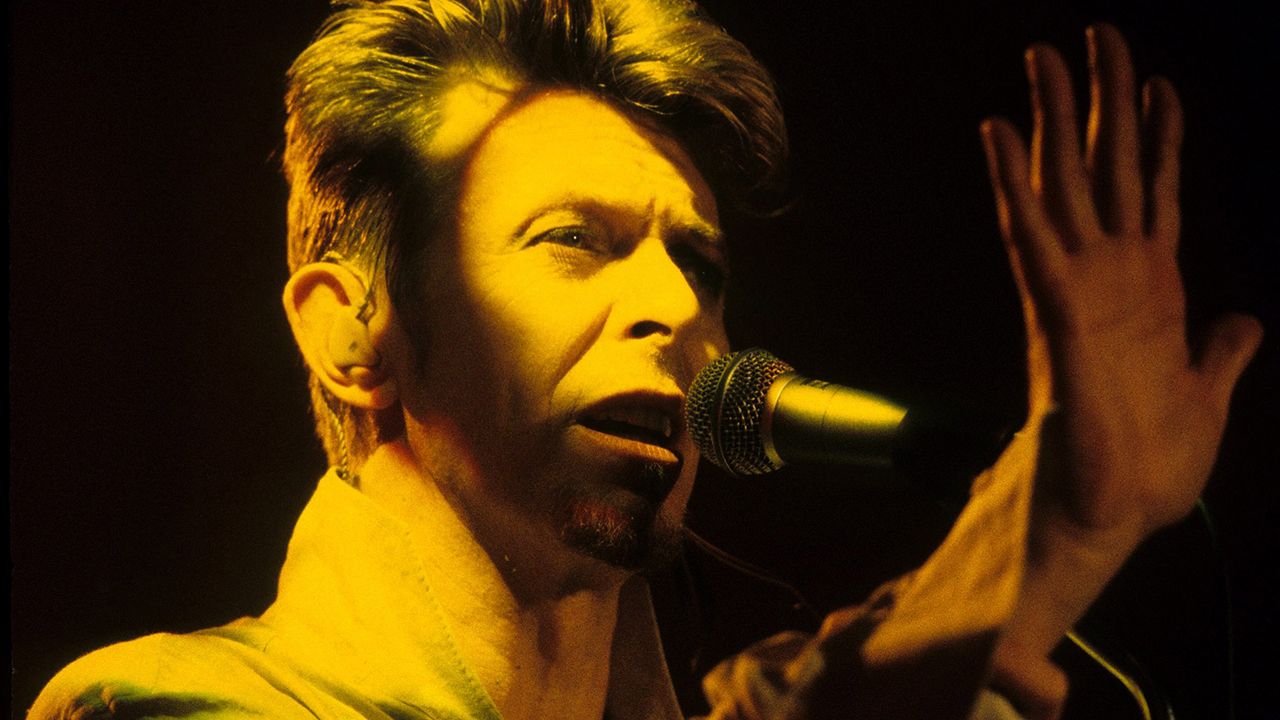
If you believe the history books, the concept album was deader than a dodo by the 1990s. While the great beasts of prog’s golden era – Thick As A Brick, Tales From Topographic Oceans, The Lamb Lies Down On Broadway et al – were a distant memory, there were still contemporary outliers willing to hitch complex, intelligent music to rich narratives or thematic spines. In 2018 Prog presented our pick of 10 great concept albums of the 90s.
Roger Waters: Amused To Death (1992)
As Pink Floyd’s majordomo, Waters was the king of the concept album – even the records that didn’t have a distinct storyline were tied together by very strong themes. but his first three solo albums each had a clearly defined focus, from The Pros And Cons Of Hitch Hiking’s time-stamped fever dream to Radio K.A.O.S.’ “paraplegic hacker nearly destroys the world” storyline. Amused To Death was Waters] grand comment on our endless appetite for mass televisual entertainment, spinning it out into his usual topics of ire: war, politicians and religion.
Porcupine Tree: Voyage 34 (1992/1993)
Strictly speaking, this is a two-part single – but as it lasts for 30 minutes, it qualifies, and it was later spun out to over an hour with two additional remixes. Long before David Gilmour worked with The Orb, Steven Wilson was imagining what Floyd would sound like with a drifting ambient makeover.
Built around the hilariously sonorous narration from an American anti-drugs P, it’s a journey through the mind of a hapless acid casualty named Brian, who begins the song by eating LSD-saturated sugar cubes and ends it meeting himself ‘coming down an up staircase.’ Wilson himself might have abstained from psychedelics, but it’s safe to say that Brian definitely wasn’t having a good trip.
David Bowie: 1. Outside (1995)
The 90s remains Bowie’s great overlooked period, and 1. Outside was his great underappreciated album of the time. Not only did the he reunite with Brian Eno and Tony Visconti – the dream team behind his fabled late-70s Berlin trilogy – but it found him serving up his first full concept album; or, in Bowie-speak: “non-linear gothic drama hyper-cycle.”
Set in a dystopian future where murder has become a literal art form, it centres around enigmatic investigator Nathan Adler as he explores the death of a baby. Lyrically opaque and deliberately disjointed, discordant and jazzy, the result comes across like an even gloomier, more opiated Blade Runner – and it’s not a huge leap from this to his final album, Blackstar, 19 years later.
Camel: Harbour Of Tears (1996)
Camel are such masters of the concept album that they even managed to pull one off – The Snow Goose – that didn’t have any lyrics. But Harbour Of Tears was a different beast entirely: its Far And Away-style concept was inspired by the real-life tale of vocalist/guitarist Andy Latimer’s grandmother and her family leaving Ireland.
The location of the title refers to Cobh Harbour in County Cork, a port from which thousands of emigrants departed during the 1800s and 1900s. It’s this personal touch, together with its evocative Celtic flourishes, that lends the record a genuine emotional undercurrent.
Radiohead: OK Computer (1997)
The big daddy of 90s concept albums – at least sales wise – Radiohead’s third release was a landmark treatise on modern culture and technological alienation that showed them to be heirs to the great conceptualists of the 70s.
The grandiose Paranoid Android was easily the proggiest No.1 single of the decade, if not ever, and it formed part of a twisting, floating, fractured work of art that summed up the pressure and pain of life on the edge of the 21st century.
Mansun: Attack Of The Grey Lantern (1997)
Mansun were the missing link between Syd Barrett and Pulp – a pop band with maverick ambition. Their debut album was actually only half a concept albuml mainman Paul Draper had started writing a story based around a fake superhero called the Grey Lantern before getting bored and abandoning the idea. But we’ll still take half an album of gloriously batty, brilliantly pretentious prog-pop any day of the week.
Fates Warning: A Pleasant Shade Of Grey (1997)
Although they predated Dream Theater by a good few years, Fates Warning have never received their dues for helping forge the prog metal template. Guitarist and mastermind Jim Matheos ploughed on regardless, and in 1997 served up this conceptual classic.
Dark and intense,A Pleasant Shade Of Grey is one 54-minute song broken into 12 untitled parts. And while the concept – broadly, of a man drifting in and out of sleep, subconsciously looking back over parts of his life – is enigmatic and oblique, it perfectly suits the music that frames it.
Pain Of Salvation: Entropia (1997)
The Swedish prog metal band came out of the gate flying with this debut, a concept album based around the tale of a war-torn family in the fictional world of Entropia – a hybrid of “entropy” and “utopia.” It took in such intense themes as parental responsibility, governmental conspiracy and humans reacting to extreme situations. The band’s Daniel Gildenlöw admitted that it took serious concentration to follow: “It’s a very complex concept that’s pretty hard to grasp,” he said. Hats off for ambition.
Dream Theater: Metropolis Pt. 2: Scenes From A Memory (1999)
The most remarkable thing about Dream Theater’s fifth record is that it took them so long to make a concept album. When they finally did, they immersed themselves in it completely – conceived as an elongated sequel to 1992 track Metropolis Part 1: The Miracle And The Sleeper, the record charted the journey of the main protagonist, a man named Nicholas, as he underwent regression therapy.
What followed was a cycle of murder, addiction, obsession and memory. If any album was a 90s version of The Lamb Lies Down On Broadway in terms of scope, this was it.
Opeth: Still Life (1999)
Mikael Åkerfeldt had dabbled in concept albums before this, when Opeth were still widely perceived as “only” a metal band – albeit one given to long, intricate musical passages. But the Swedes’ fourth album found him taking on more than just the musical trappings of prog.
It was an anti-Christian tract that told of the main character’s return to his hometown after being banished for his lack of faith, taking in love, murder and revenge. Spoiler alert: it doesn’t end happily.
(LouderSound)
Leave a Reply