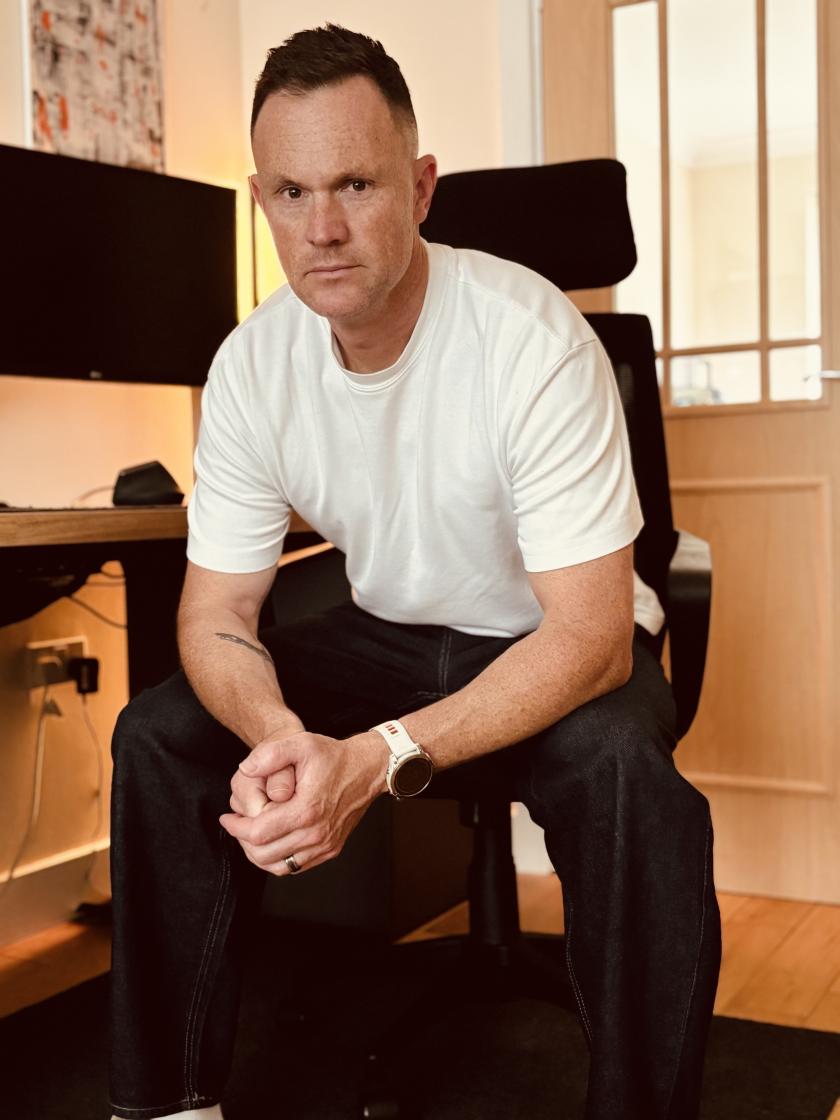
Gavin Brophy
Feeling stuck between junior and senior is a common experience, so why is it never discussed? We chat to brand designer Gavin Brophy about this much-misunderstood phase of a creative career.
Everyone’s career has a “messy middle”, where you’re long past being a junior, but being respected as a senior still seems light years away, and the way forward seems murky. You’d be forgiven, though, for thinking that it’s only happening to you, particularly if you’re looking at Instagram.
Here, you’ll see the graduation photo. Then, years later, the studio launch announcement. Then, years after that, the creative director title and the framed awards. But the bit in between, where most of us actually are, rarely makes it onto anyone’s social feed. And that’s a darn shame.
Because actually, the messy middle isn’t an aberration or an embarrassment. It’s where the real work of becoming a designer actually happens. And ignoring this fact only makes it unnaturally stressful and lonely for everyone going through it.
When the staircase hits the ceiling
Gavin Brophy knows this dynamic well. Eleven years into a career that’s taken him from a self-taught logo designer in South Africa to senior brand roles at Trek Bicycle and EF Pro Cycling, he’s now freelancing again after the toughest stretch of his working life. And he’s keen to talk about how the messy middle feels, day to day. To kick us off, he reaches for a comparison you might not expect: bad hair.
Campaign image credits: Gruber Images / Trek Bicycle / Superseed Studio
“You hit this phase where it’s just long enough to look like crap and just too short to actually be considered long,” he reflects. “That’s the messy middle. It’s awkward, and there’s no shortcut through it.”
He’s got a point, right? Growing out a haircut is uncomfortable precisely because there’s no clean before-and-after. You certainly don’t want to photograph it and put it on Instagram. And those career years that don’t fit neatly into a portfolio basically work in the same way.
Nobody tells you this, of course. And so Gavin assumed, as many of us do, that a career was a staircase. Junior, midweight, senior, creative director, CEO: each step following in an orderly sequence. Then he ran his own freelance business in South Africa, watched the money run dry, moved his family to the UK, and took a designer role at Trek; a step sideways on title, even as the brand got bigger.
“I went in knowing the UK design industry operated at a different level, so I was happy to start low and work my way up,” he recalls. “But there was a ceiling, and the bike industry took a massive hit after COVID. That path closed off.”
What follows is the part of the story most About Me pages leave out. A move to EF Pro Cycling as sole designer for the team, then a return to freelancing, which, in his words, “knocked me harder than I expected”.
The lesson here is not about cycling brands specifically. It’s those sideways moves—demotions in title if not in substance—that are often just the industry rearranging itself around you. And treating them as personal failure is totally the wrong way to think about it.
When men stay schtum
The conversation about mid-career doubt tends to centre on women, and rightly so, given the structural reasons why. But Gavin is candid about what gets buried when men, specifically, stay quiet.
“I can’t speak for all men, but from my own experience, I find it genuinely difficult to speak my mind, especially in the design industry,” he says. “Feeling stuck or unsure is a big deal to admit. Over the last two years, I’ve dealt with a lot on my own. Antidepressants that leave you feeling numb. A diagnosis of inattentive ADHD. And underneath all of that, I was trying to convince myself that imposter syndrome was just in my head. That one has been eating away at me for years.”
It’s a striking admission precisely because it’s stated so plainly. No flourish, just the facts of a hard few years laid out one after another. So why don’t men, you know, talk about this stuff?
“Men are scared of looking weak or like we don’t have our shit together,” says Gavin. “We’re expected to just push on, so we do. We’ve got people depending on us. We care more about them than about our own wellbeing, and that takes priority every time.” Whatever you think of that trade-off, it’s worth identifying and naming, because creative industries are full of people making it.
Part of the reason they make it is because they love the work so much. But Gavin has learned that that doesn’t always protect you. “When you invest your passion into a project you actually care about, the highs can be extraordinary, but so can the lows,” he observes. T “he difference is that when you’re personally invested, you tend to find creative ways to push through the lows, purely because you care enough to keep going. That doesn’t always work, though, and sometimes the hardest part is knowing when to walk away.”
What is success?
Perhaps the most useful shift in Gavin’s thinking has been around the concept of success itself. Early on, it meant entering 99designs contests for the dopamine hit of being paid for a logo. Later, it meant solving business problems creatively.
Nowadays, he says, “success today means working in a team that pushes boundaries, explores, defines, and adapts. It means investing time in new talent and learning from them in return.” Titles, he insists, were never really the point. “I feel like your work should be your title. Show the work you are proud of, and it will create its own title.”
For anyone currently stuck somewhere between the haircut that’s too short and the one that’s nearly there, this is great advice. And as Gavin puts it to those just entering their own messy middle: “It does get better. Stay true to what you love and try not to let the outside world mould you. You are exceptional, and you have a special place in this crazy world.”
Leave a Reply