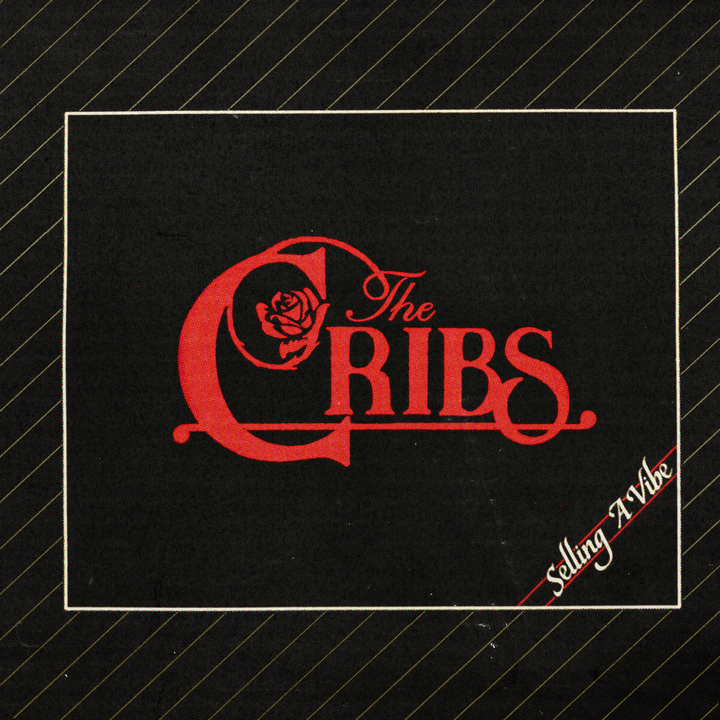
Label: PIAS
Released: 9th January 2026
There comes a point in long band careers where momentum stops being a virtue and starts becoming a habit. On ‘Selling A Vibe’, The Cribs sound acutely aware of that distinction. This is not an album driven by the urge to prove relevance, reclaim ground or summon the ghosts of past chaos. Instead, it feels like the product of something far rarer for them: time, distance, and the clarity that comes with both.
The Cribs have spent most of their existence in near-constant motion, releasing records, touring relentlessly and trusting that forward movement would answer whatever questions cropped up along the way. Shaped by legal wrangling and a wider post-pandemic malaise, the enforced pause that followed 2020’s ‘Night Network’ interrupted that rhythm for the first time. ‘Selling A Vibe’ sounds like what happens when a band that has always defined itself by persistence is forced to ask why it’s persisting at all.
What emerges is not reinvention, nor retreat. Instead, this is a record that pares things back to first principles. It feels lean, deliberate and unusually settled, as though the band have stripped away anything that isn’t essential to how they function. If earlier Cribs albums thrived on volatility and confrontation, this one draws its strength from restraint.
That intent is clear from the opening moments. ‘Dark Luck’ snaps straight into focus, all clipped guitars and nervous energy. Ross Jarman’s drumming is characteristically tight, while there’s a noticeable lightness to the sound, a sense of space around the instruments that gives everything room to land cleanly. It’s recognisably The Cribs, but without the sense of compression that sometimes defined their earlier work.
Throughout ‘Selling A Vibe’, that clarity holds. Songs are concise and purposeful, arriving with confidence and leaving before they wear out their welcome. There is very little here that feels overworked or overstated. ‘A Point Too Hard To Make’ emerges as the album’s centre of gravity, not because it tries to do more than its surroundings, but because of direct songwriting that trusts its own economy. Elsewhere, the record allows itself to slow down without losing focus. Not every track demands the same level of attention, but the consistency means that nothing feels misplaced.
A significant part of what gives ‘Selling A Vibe’ its cohesion is the sense of unity running beneath it. This is an album shaped by the band reconnecting with each other as people, not just as professional bandmates. The Cribs’ history has often been framed through chaos and caricature, but there’s a steadiness to the record that reflects a recalibration of priorities, an acceptance that what has sustained them over two decades is not excess, but solidarity.
That idea finds its clearest expression at the album’s close. ‘Brothers Won’t Break’ does not arrive as a grand statement or a dramatic flourish. Instead, it feels like a quiet acknowledgement of what underpins everything that came before it. Ending the record here reinforces the sense that ‘Selling A Vibe’ is less concerned with how The Cribs are seen and more with how they hold together.
Crucially, the album avoids framing this moment as a comeback. There is no sense of panic about where the band sit in 2026. ‘Selling A Vibe’ feels comfortable with its own context, aware of the years that have passed and the landscape that has shifted. That confidence is understated, but it runs deep.
After more than twenty years, The Cribs no longer sound like a band trying to outrun their own mythology. Instead, they sound grounded and quietly assured. ‘Selling A Vibe’ is not flashy, nor does it need to be. It is cohesive, disciplined and self-aware, a record made by a band who have stopped mistaking motion for meaning. In doing so, The Cribs sound not revitalised, but re-centred, and that distinction makes all the difference.
Leave a Reply