WHAT EVERYONE SHOULD BE TALKING ABOUT THIS WEEK
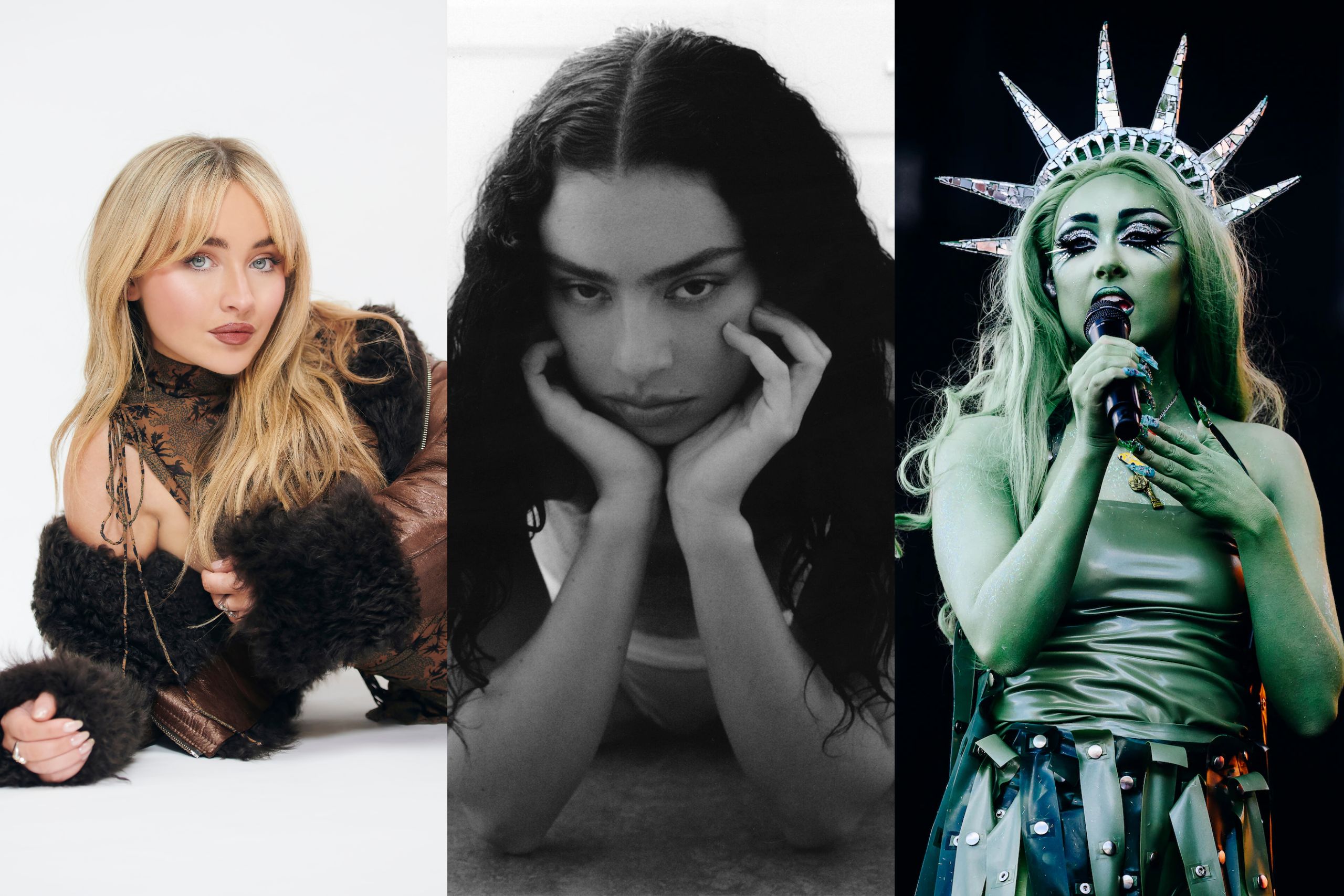
Three artists, twenty Grammy nominations, and zero fucks given. Chappell Roan, Sabrina Carpenter and Charli xcx’s nomination domination prove pop is done playing it safe.
When Chappell Roan emerged as Lady Liberty at the Governor’s Ball, engulfed in a cloud of theatrical smoke, it wasn’t simply a flashy entrance from an artist breaking through to the mainstream in real time – it was a harbinger of what would become one of pop’s most validating moments. Now, with six Grammy nominations, including all four major categories, that theatrical declaration has been transformed into an industry-shifting statement. Alongside fellow maximalist visionaries Sabrina Carpenter and Charli xcx, who together amassed an astounding 20 nominations between them, Roan stands at the vanguard of a pop revolution that’s being recognised at the highest levels.
The nominations tell a story bigger than just industry accolades. In a year where six out of eight Album of the Year slots went to female artists, it’s the specific nature of these nominations that speaks volumes. Roan’s six nods for ‘The Rise and Fall of a Midwest Princess’ and Carpenter’s equivalent haul for ‘Short n’ Sweet’ – including Record, Album, and Song of the Year plus Best New Artist for both – represent a seismic shift in how the industry views theatrical pop expression. Meanwhile, Charli xcx’s eight nominations as an artist (or nine, if you include the remix category where the award would go to producer A. G. Cook) for ‘Brat’ cement this transformation, with recognition spanning from Pop Solo Performance to Dance/Electronic Album.
“I’ll be honest, and I know this sounds cocky, but I’m not that surprised people like it because it’s really good,” Roan told Dork last December, discussing her debut album. That confidence wasn’t always so assured. “The past few years have been very hard. I got dropped in 2020, and I ran out of money. I had to move back in with my parents… I’m really proud of myself that I stuck with it because it was pretty bleak for a long time.”
The era of carefully curated restraint isn’t ending with a whimper – it’s being crushed under the weight of rhinestones, drowned out by theatrical vocals, and buried beneath layers of knowing wit and unrestrained attitude. In its place rises something far more interesting: pop stars who understand that the truest form of expression doesn’t hold back.
“I just wanted to be a drag queen,” Chappell explained, describing her vision. “I wanted to create concerts where people could dress up and have a blast.” She wasn’t kidding. By the time Bonnaroo rolled around, her crowds had swollen beyond their allocated space, forcing organisers to shuffle stages to accommodate an audience hungry for something bigger and bolder. That vision has now earned her nominations in every major Grammy category – a validation of excess that feels particularly poignant given her journey. “I love seeing queens express themselves in such a dramatic and campy way. It’s so joyful. It’s very inspiring for my show.”
This hunger for spectacle didn’t emerge from nowhere. After years of bedroom pop, lo-fi aesthetics and a pandemic that forced us all into our smallest spaces, pop seems ready to bust down the doors and reclaim its right to be extraordinary.
The timing of Carpenter’s emergence – several albums deep and finally fully unleashed – speaks volumes about this cultural shift. “I don’t think I held back, and I’m happy I didn’t,” she told Dork in April 2023. That fearlessness has paid off spectacularly with six Grammy nominations, including Record of the Year for ‘Espresso’ and Album of the Year for ‘Short n’ Sweet’ – a validation of a career built on understanding that a final form for an artist doesn’t always arrive fully formed at sixteen.
“At a certain point, if you don’t just rip off the band-aid, you’ll end up lying to yourself forever, and that’s no fun,” Carpenter explained. “It also felt nice to just let go and not be concerned about what people are going to think or how they’re going to perceive you.” She knows people will judge her whatever she does. “[It happens] even if you give them a fake version of yourself, so you may as well just be real with yourself. That’s the way for me to be the most happy.”
But if Roan and Carpenter were subtly shifting pop’s tectonic plates, Charli xcx arrived with a sledgehammer. ‘Brat’ exists to push pop to its extremes, and now its multiple nominations across pop, dance, and general field categories prove that provocation and pop craft aren’t mutually exclusive. When every song sound sits in every possible listener’s pocket, and algorithms serve up an endless stream of careful competence, sometimes the most radical act is to be deliberately, gloriously difficult.
“People feeling seen and feeling acknowledged,” Roan answered when asked what matters most about her success. “People feeling safe at my shows to dress up however they want and be who they are. I love that people feel free and accepted, and that’s all I could ever ask.” Speaking to The Guardian in September, she described her mission as “creating safe spaces through excess” – a phrase that could serve as a manifesto for this new era of unrestrained pop expression.
This isn’t just about aesthetics. The quieter era of pop wasn’t just about sound – it was about a particular kind of performance, one that often prioritised fitting in with expectations over being powerful. The new maximalism isn’t just about volume or spectacle; it’s about not waiting for permission to take up space. Permission to be too much, too loud, too weird, too much fun.
“I think it’s so easy to tell the things that are honest, versus not,” Carpenter reflected. “I think, for whatever reason, there’s just like a little magical pixie dust that goes into the things where you’re telling the truth. People can sense that.” She’s seen this firsthand in the response to her music. “The coolest thing has been people that maybe didn’t really listen to my music before, or didn’t think they ever should, hearing this album.”
What binds these three artists together isn’t just their rejection of minimalism – that’s merely the wrapping paper on a more intriguing gift. It’s their understanding that authenticity comes in many forms, and sometimes the most honest version of yourself arrives with a bang. Where Roan turns stages into drag-inspired wonderlands, Carpenter weaves wit through precision-engineered pop, and Charli xcx transforms provocation into pure joy.
“I love that pop music has become everything,” Carpenter observed. “When I was younger, it was very easy to feel like you had to choose one style and stick with it. Thank god people don’t believe that anymore.”
The streaming numbers tell part of the story; the festival crowds tell another. But perhaps the starkest evidence lies in these Grammy nominations – an institutional acknowledgement that pop works best when it embraces its own power to provoke, delight, and transform. After years of restraint, we’re witnessing a moment where the industry is celebrating artists who dare to dream in technicolor.
An era of pop that was most concerned about fitting the current aesthetic rather than setting its own isn’t ending because it failed – quite the opposite. It’s moving on because it succeeded so completely that it became suffocating. In its place rises something more liberating: the understanding that sometimes the truest thing you can be is too much. When most talk in whispers, there’s nothing more effective than a perfectly timed scream – especially when that scream comes with Grammy validation. ■
Leave a Reply